Limestone building stone has remained a cornerstone of architectural evolution for millennia, offering a unique blend of aesthetic versatility and structural integrity. From the majestic pyramids of Giza to the refined facades of European cathedrals, this sedimentary rock has proven its worth as a reliable medium for both monumental and residential construction. In today's market, the demand for limestone building stone continues to grow as architects seek materials that bridge the gap between timeless tradition and modern sustainability.
Globally, the shift toward "green building" has repositioned limestone as a premium choice due to its natural origins and lower carbon footprint compared to synthetic alternatives. As urbanization accelerates in emerging economies, the integration of high-quality natural stone becomes essential for creating durable infrastructure that resists the wear and tear of time and environment. Understanding the nuances of limestone—from its porosity to its compressive strength—is critical for developers who aim to balance luxury with longevity.
The challenge facing the modern construction industry is the scarcity of consistent, high-grade quarry sources and the need for precision processing. By leveraging advanced cutting technologies and sustainable extraction methods, the industry can now provide limestone building stone in various formats, including ledgestone and paving tiles, ensuring that the inherent beauty of the earth is preserved while meeting the rigorous technical standards of contemporary engineering.
The Geological Composition of Limestone Building Stone
Limestone is primarily composed of calcium carbonate, typically in the form of calcite or aragonite. This organic origin, often resulting from the accumulation of shell, coral, and algal debris, gives limestone building stone its distinctive texture and a color palette that ranges from creamy whites and soft yellows to deep greys. The sedimentary process creates a stone that is relatively easy to carve yet remarkably stable once set in a structure.
Because of its chemical makeup, limestone is highly responsive to various finishing techniques, allowing it to be polished for interior flooring or left rough-hewn for exterior cladding. This geological flexibility makes it an ideal candidate for a wide array of product categories, including glued stacked stone veneers and stone columns, providing architects with a natural tool to manipulate light and shadow on a building's surface.
Core Technical Properties for Architectural Use
When selecting limestone building stone for a project, durability is the primary technical consideration. Its compressive strength allows it to support significant loads, making it suitable for foundation work and heavy paving stones. However, the porosity of the stone varies; denser limestones are preferred for high-traffic areas, while more porous varieties are often used for decorative wall cladding where breathability is an advantage.
Another critical factor is the stone's thermal mass. Limestone has an excellent ability to absorb and slowly release heat, which naturally regulates the internal temperature of a building. This property reduces the reliance on artificial HVAC systems, aligning the use of limestone building stone with modern energy-efficiency goals and LEED certification standards.
Lastly, the workability of the material cannot be overstated. Unlike granite, which requires diamond-tipped heavy machinery for every cut, limestone can be shaped with more precision and less energy. This allows for the creation of intricate moldings, free-form masonry, and custom-cut mosaics that add a layer of bespoke craftsmanship to any commercial or residential development.
Comparing Limestone with Other Natural Stones
In the broader landscape of masonry, limestone building stone is often compared to marble and sandstone. While marble offers a higher luster, limestone provides a more understated, matte elegance that is often more appropriate for contemporary minimalist designs or rustic traditional styles.
From a cost-efficiency perspective, limestone generally sits in a "sweet spot"—it is more durable and prestigious than many synthetic composites but more affordable than rare granites or exotic marbles. This makes it the preferred choice for large-scale applications like paving stones and stepping stones in urban plazas.
Unlike sandstone, which can be prone to exfoliating in extreme freeze-thaw cycles, high-quality limestone building stone is engineered to withstand diverse climates. When properly sealed, its resistance to water penetration increases, ensuring that the stone maintains its structural integrity and color vibrancy for decades.
Performance Metrics Across Various Environments
The performance of limestone building stone varies depending on the finishing method and the environmental exposure it faces. For instance, honed finishes provide a smooth surface that is easier to clean in indoor environments, whereas tumbled finishes offer the slip resistance necessary for outdoor paving and stepping stones.
To better understand how different types of limestone perform, we evaluate them across key metrics such as hardness, water absorption, and aesthetic appeal. This data helps architects choose the right variant—whether it's for a high-end hotel lobby or a rugged exterior retaining wall.
Performance Analysis of Limestone Building Stone Variants
Global Applications and Regional Trends
In North America and Europe, limestone building stone is increasingly used in "biophilic design," where the goal is to integrate natural elements into urban spaces to improve mental well-being. We see this trend manifesting in the use of free-form masonry and stone cobbles in city parks and residential gardens, creating a seamless transition between the built environment and nature.
In the Middle East and Asia, the application is often more focused on luxury and scale. Massive limestone facades and intricate stone columns are used in government buildings and high-end resorts to convey power and permanence. The rise of glued stacked stone veneers has also allowed these regions to achieve the look of traditional stone masonry with much faster installation times and reduced structural weight.
Long-term Value and Maintenance Strategies
Investing in limestone building stone is a decision that pays dividends over decades. Unlike synthetic siding or paint, which degrade and require frequent replacement, natural limestone weathers gracefully. When properly maintained, it develops a patina that adds character and historical value to a property, often increasing the overall real estate valuation.
Maintenance involves a combination of preventative sealing and periodic cleaning. Because limestone is alkaline, it is sensitive to acidic cleaners; therefore, pH-neutral soaps are recommended. For exterior paving stones, a high-quality penetrating sealer is essential to prevent oil stains and water ingress, which can lead to discoloration or cracking during winter frosts.
Ultimately, the long-term value lies in the material's reliability. Whether used as back cement ledgestone for an accent wall or as primary floor tiles, limestone resists fire and pests, providing a level of safety and dignity to the living space that modern polymers simply cannot replicate.
Future Innovations in Stone Processing
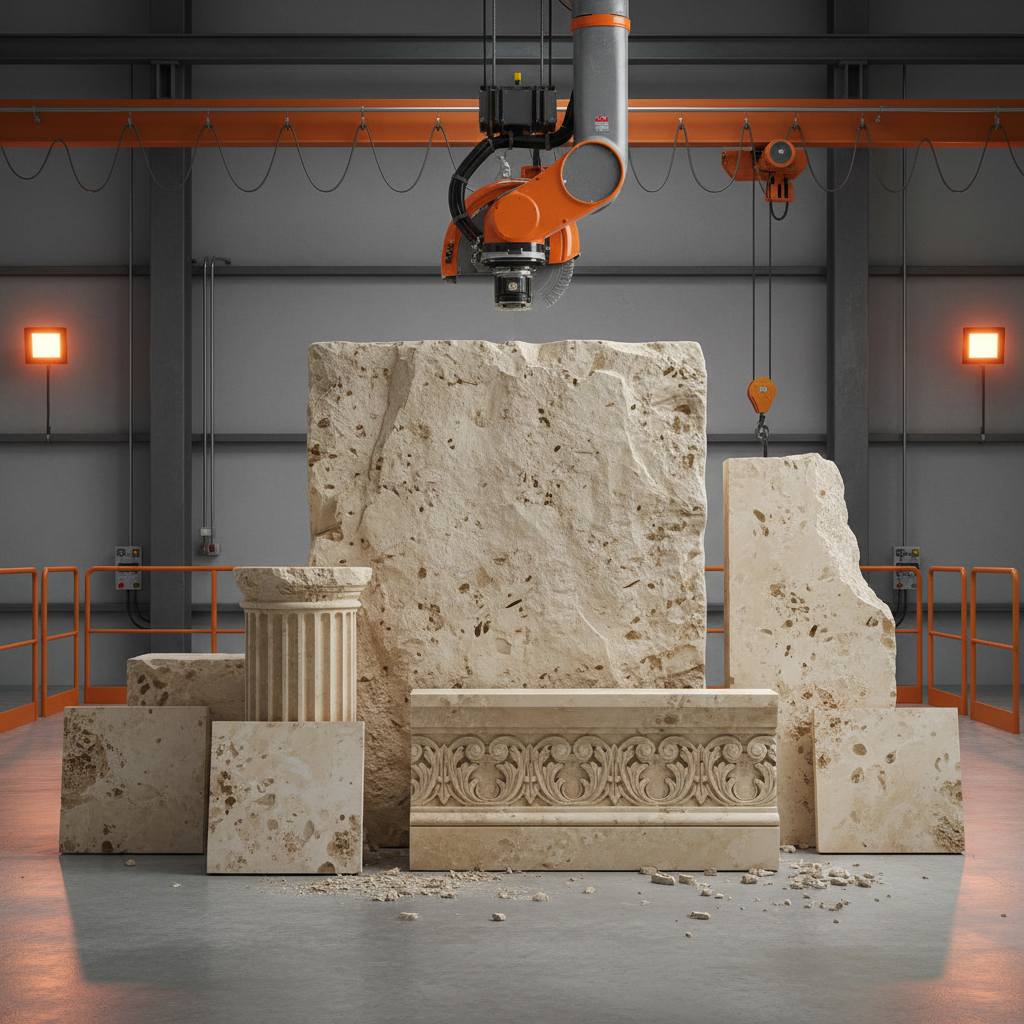
The future of limestone building stone is being shaped by digital transformation. CNC (Computer Numerical Control) milling and robotic carving are allowing for unprecedented complexity in stone design, enabling architects to create fluid, organic shapes that were previously impossible or too expensive to carve by hand.
Furthermore, the industry is moving toward a "circular economy" model. Waste fragments from the production of large slabs are being repurposed into stone mosaics and pebbles, ensuring that quarrying has a minimal environmental footprint. This commitment to sustainability is not just an ethical choice but a commercial necessity as international building codes become stricter regarding material waste.
We are also seeing the emergence of "smart sealants"—nanotechnology-based coatings that are completely invisible but provide an impenetrable barrier against pollutants and water. These innovations ensure that limestone building stone remains a viable and cutting-edge choice for the next generation of sustainable architecture.
Comparison of Processing Technologies for Limestone Building Stone
| Processing Method |
Precision Level |
Production Speed |
Eco-Impact Score |
| Traditional Hand-Carving |
High (Artistic) |
Very Low |
10/10 |
| Standard Saw-Cutting |
Medium |
High |
6/10 |
| CNC Robotic Milling |
Extreme |
Medium-High |
7/10 |
| Water-Jet Cutting |
High |
Medium |
8/10 |
| Automated Polishing |
High (Uniform) |
Very High |
5/10 |
| Laser Etching |
Extreme |
High |
9/10 |
FAQS
Yes, provided you choose a high-density variety and apply a professional-grade penetrating sealer. The main risk in cold climates is the freeze-thaw cycle, where water enters pores, freezes, and expands. Sealed limestone prevents this moisture ingress, ensuring the stone remains crack-free and structurally sound through harsh winters.
Limestone is generally more porous than granite, meaning it requires more frequent sealing and is more sensitive to acidic substances (like lemon juice or vinegar). However, it is much easier to repair or re-finish if it becomes scratched. While granite is "set and forget," limestone offers a softer, more organic aesthetic that rewards a bit more care.
Absolutely. Limestone floor tiles are popular in bathrooms for their natural warmth and elegance. However, because bathrooms are high-moisture environments, it is imperative to use a high-quality impregnating sealer to prevent water stains and mildew from penetrating the stone's surface.
Ledgestone consists of narrow, rectangular strips of stone that create a structured, linear look, often sold as glued stacked stone veneers. Free-form limestone, on the other hand, utilizes irregular shapes and sizes to mimic a natural cliffside or traditional dry-stack wall, offering a more rustic and organic appearance.
Yes, it is one of the most sustainable building materials available. It is naturally sourced, requires significantly less energy to process than synthetic materials or ceramics, and has a very long lifespan. Additionally, its thermal mass properties help reduce energy consumption in buildings by naturally regulating temperature.
Avoid acidic cleaners. The best method is to use a "poultice"—a paste made of a cleaning agent (like baking soda and water) applied to the stain, covered with plastic, and left for 24-48 hours. This draws the stain out of the porous stone. For professional results, consult a stone restoration expert.
Conclusion
In summary, limestone building stone represents a perfect harmony between geological heritage and modern architectural demand. From its inherent durability and thermal efficiency to its versatility across product lines like paving stones, ledgestones, and mosaics, limestone provides a sustainable and timeless solution for any construction project. By understanding its technical properties and adhering to proper maintenance, developers can ensure a legacy of elegance and strength.
Looking forward, the integration of CNC technology and nano-sealants will only enhance the viability of natural stone in an increasingly digital world. We encourage architects and homeowners to embrace the organic beauty of limestone to create spaces that are not only visually stunning but also environmentally responsible. To explore our premium collection of natural stone solutions, visit our website: www.sonmacistone.com